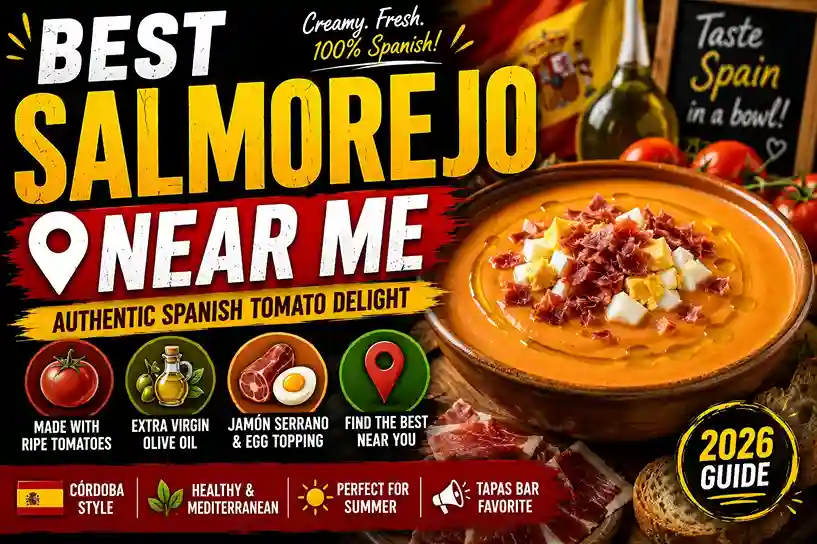
The Quest for the Perfect Bowl of Salmorejo
When the temperature rises, or when your palate simply craves something vibrant, creamy, and deeply satisfying, few dishes deliver like a classic Spanish cold soup. If you have been searching for the best salmorejo near me, you are likely looking for more than just a quick lunch. You are seeking an authentic culinary journey to the sun-drenched taverns of Andalusia.
Salmorejo is often overshadowed on international menus by its famous cousin, gazpacho. However, those in the know understand that salmorejo is in a league of its own. It is thicker, creamier, and boasts a velvety texture that feels incredibly indulgent, despite being made from simple, wholesome ingredients. To find a truly spectacular version in your local area, you need to know what makes this dish authentic and how to spot a kitchen that respects traditional Spanish preparation. Sourcing nutrition-supportive versions of this dish ensures you enjoy both the rich flavor and the heart-healthy benefits of the Mediterranean diet.
In this comprehensive guide, we will unpack the history of salmorejo, explore the precise anatomy of an authentic recipe, teach you how to evaluate local restaurants, and even provide a backup plan with a foolproof traditional recipe you can make at home.
—
What is Salmorejo? Understanding the Cordobés Classic
Salmorejo (specifically Salmorejo Cordobés) originates from the historic city of Córdoba in Andalusia, southern Spain. Historically, it was a humble peasant dish designed to stretch basic ingredients like stale bread, tomatoes, garlic, and olive oil into a filling, refreshing meal to sustain laborers during the scorching Andalusian summers.
Unlike gazpacho, which includes cucumbers, bell peppers, onions, and vinegar, traditional salmorejo keeps its ingredient list minimalist. It relies on the perfect emulsion of high-quality extra virgin olive oil and ripe tomatoes, thickened with dense, stale white bread. The result is a smooth, spoonable purée that is served chilled, traditionally garnished with hard-boiled egg and savory jamón serrano.
—
The Anatomy of Authentic Salmorejo
To identify the best salmorejo near you, you must understand the quality of the ingredients. An authentic Spanish kitchen will never cut corners on these five essential components:
1. The Tomatoes
The foundation of any great salmorejo is the tomato. Real Spanish chefs prioritize ripe, fleshy, and naturally sweet tomatoes. Plum tomatoes (like Roma) are frequently used, but elite versions feature Spanish heritage varieties such as Santa Cruz or Raf tomatoes. These varieties provide the perfect balance of natural acidity and sugar, eliminating the need for added sweeteners or excessive vinegar.
2. The Bread
You cannot make authentic salmorejo with pre-packaged sandwich bread. Traditional recipes call for pan de telera, a dense, white, sourdough-like bread native to Córdoba with a tight crumb and a thin crust. When searching for local spots, ask if they use traditional crusty white bread or rustic sourdough. The starch in the bread is crucial for binding the water from the tomatoes with the olive oil to create a stable, creamy emulsion.
3. Extra Virgin Olive Oil (EVOO)
Olive oil is not just an accent; it is a primary ingredient. Authentic salmorejo requires a generous pour of high-quality extra virgin olive oil, ideally certified by a Spanish Consejo Regulador (such as those from Baena or Sierra de Segura). A monovarietal EVOO made from Arbequina olives yields a soft, fruity profile, while Picual adds a robust, peppery kick. The high oil content, when blended thoroughly, creates the signature creamy texture without a single drop of dairy.
4. Garlic and Salt
A touch of garlic provides the necessary depth and bite. However, a master chef knows moderation is key. The garlic should whisper, not scream. Many chefs remove the germ (the green core) from the garlic clove to prevent bitterness and ensure a smoother, more digestive finish.
5. The Toppings
Traditional salmorejo is never served plain. It is elevated by its contrasting toppings:
- Hard-boiled egg: Finely minced or grated, adding a rich, creamy contrast.
- Jamón: Cured Spanish ham (preferably Jamón Ibérico or Jamón Serrano) cut into small, chewy, salty cubes or ribbons.
- A final drizzle of EVOO: To enhance the aromatics just before serving.
—
Salmorejo vs. Gazpacho: The Definitive Breakdown
It is common for restaurants outside of Spain to confuse these two cold soups, but they are highly distinct culinary experiences:
| Feature | Salmorejo | Gazpacho |
|---|---|---|
| Texture | Thick, velvety, cream-like (eaten with a spoon) | Thin, liquid, refreshing (often served in a glass) |
| Key Vegetables | Tomatoes and garlic only | Tomatoes, cucumbers, bell peppers, onions, and garlic |
| Bread Content | High (essential for emulsified thickness) | Minimal or none |
| Vinegar | Rarely used, or used very sparingly | Essential for sharp, tangy flavor |
| Traditional Garnish | Diced jamón and hard-boiled egg | Diced raw cucumbers, bell peppers, and croutons |
—
How to Find the Best Salmorejo Near You
Finding an authentic bowl of this Andalusian treasure outside of Spain requires a little bit of culinary detective work. Here is how to track down the absolute best options in your area:
Search for Authentic Tapas Bars and Tabernas
Your best bet is always a dedicated Spanish restaurant, specifically one that brands itself as an authentic *tapas bar* or *taberna*. Look for establishments run by Spanish expats or chefs who have trained extensively in Spain. Menus that highlight regional specialties from Andalusia (like flamenquín, berenjenas con miel, or rabo de toro) are highly likely to serve an exceptional, scratch-made salmorejo.
Review the Menu Clues
When looking at local menus online, read the descriptions carefully. Be on the lookout for these green flags and red flags:
- Green Flag: The menu mentions “evoo,” “Serrano ham,” “hard-boiled egg,” or “Cordobés style.”
- Green Flag: The soup is described as an emulsion of tomato and olive oil, emphasizing a thick texture.
- Red Flag: The menu lists ingredients like cream, yogurt, or mayonnaise to achieve thickness. Authentic salmorejo is naturally vegan (before toppings are added) and gets all its creaminess from bread and oil.
- Red Flag: The dish is served warm or room temperature. Salmorejo must be thoroughly chilled to allow the flavors to meld.
Leverage Local Food Communities and AI Locators
Don’t rely solely on standard search engines. Dive into local foodie forums, culinary subreddits, or dedicated dining applications. Advanced culinary discovery tools can analyze regional menus, chef backgrounds, and local dining reviews to point you directly to the closest kitchen serving highly rated, traditional Spanish dishes.
—
Evaluating the Quality: The Visual and Taste Test
Once you sit down at a local restaurant and order your bowl, use your senses to evaluate if you have found a winner:
The Color Test: Authentic salmorejo should not be bright cherry red. Because of the heavy emulsion of red tomatoes with golden-green extra virgin olive oil and white bread, the final color should be an elegant, warm, pastel orange or deep salmon-pink.
The Texture Test: Dip your spoon into the bowl. It should hold its shape slightly and coat the back of the spoon luxuriously. If it runs off like water, it is too thin. If it is pasty, heavy, or clumpy, the chef did not use enough olive oil or failed to blend it at a high enough speed to create a proper emulsion.
The Flavor Test: Your first spoonful should taste intensely of fresh, sweet tomato, followed immediately by the complex, fruity, slightly peppery notes of high-quality olive oil. The garlic should linger gently in the background without burning your tongue, balanced beautifully by the salty, savory bite of the jamón garnish.
If your culinary journeys inspire you to seek out other sophisticated European delicacies near you, you might also enjoy exploring where to find classic French cuisine to expand your gastronomic horizons.
—
Can’t Find a Great Spot Nearby? How to Make Authentic Salmorejo at Home
If your local search comes up empty, don’t worry. Salmorejo is incredibly easy to make at home, requiring no cooking skills—just a high-speed blender and excellent ingredients.
Ingredients:
- 1 kg (2.2 lbs) very ripe plum (Roma) tomatoes
- 200g (7 oz) stale, dense white bread (crusts removed, torn into chunks)
- 150ml (5 oz) top-quality Extra Virgin Olive Oil
- 1 small clove of garlic (germ removed)
- 1 teaspoon salt (adjust to taste)
- For garnish: 2 hard-boiled eggs (chopped) and 50g jamón serrano (diced)
Instructions:
- Prep the Tomatoes: Wash the tomatoes and cut them into quarters. Blend them on high speed for 2-3 minutes until completely liquefied.
- Strain (Optional but Recommended): If you want an ultra-smooth finish, pass the blended tomatoes through a fine-mesh strainer to remove any remaining seeds and skins. Return the liquid to the blender.
- Soak the Bread: Add the stale bread chunks directly into the tomato juice. Let it sit for about 10 minutes so the bread absorbs the liquid and softens completely.
- Blend the Base: Add the garlic clove and salt. Blend on high until the mixture is completely smooth and uniform.
- Emulsify: With the blender running on medium-high speed, slowly drizzle in the extra virgin olive oil in a thin, steady stream. Watch as the soup magically transforms from a dull red into a creamy, luscious, pastel-orange masterpiece.
- Chill: Transfer the salmorejo to a glass container and refrigerate for at least 2 to 3 hours. It tastes best when thoroughly cold.
- Serve: Pour into shallow bowls. Generously top with the chopped hard-boiled egg, diced jamón, and a final flourish of olive oil. Enjoy with a side of crusty bread!
—
Final Thoughts: Embracing the Mediterranean Lifestyle
Finding the best salmorejo near you is a rewarding pursuit that connects you directly with the culinary soul of southern Spain. Whether you discover a hidden gem of a tapas bar in your city or craft your own perfect batch at home, this simple, nutrient-dense masterpiece is a testament to the magic of minimal, high-quality ingredients. Keep your eyes open for authentic preparation, rich emulsified textures, and Spanish heritage ingredients—and prepare to enjoy one of the finest cold dishes the culinary world has to offer.